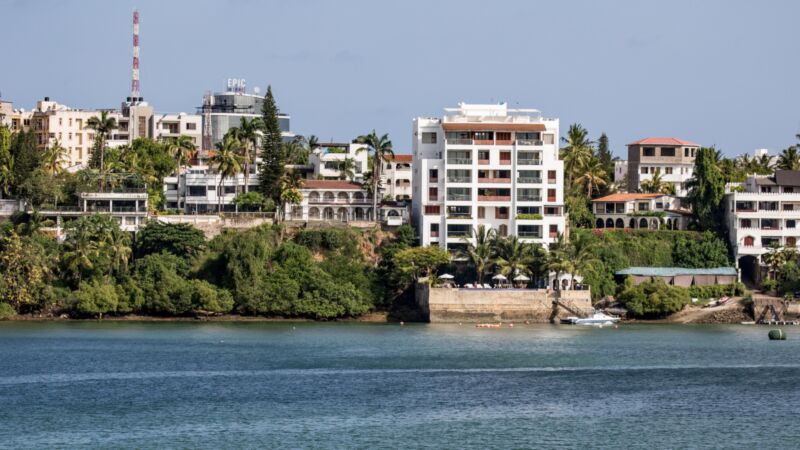
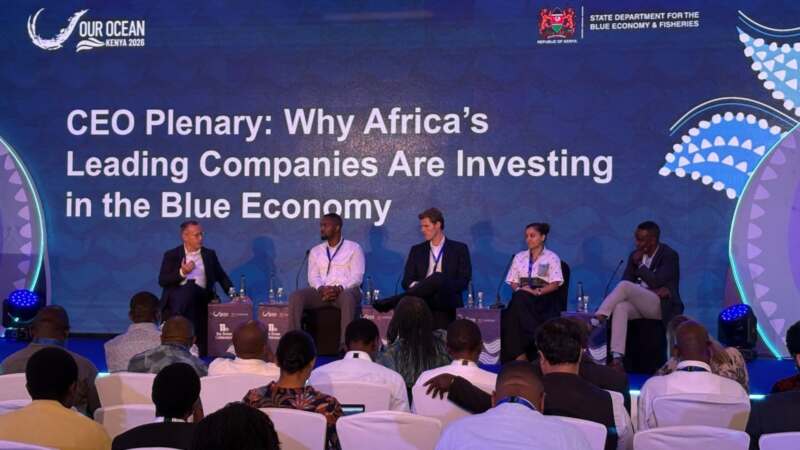
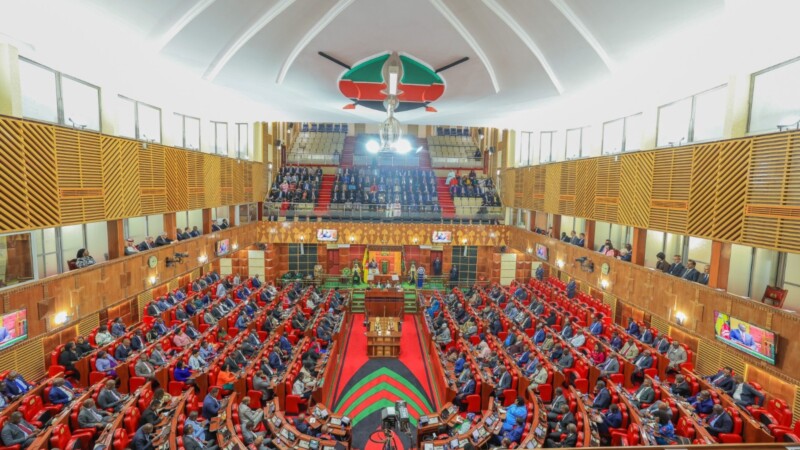
For twelve years, and 10 editions, the Our Ocean Conference travelled the world. Washington. Valparaíso. Malta. Oslo. Palau. Lisbon. Panama City...then it came to Mombasa.
And something shifted that cannot be measured in the $1.75 billion in fisheries commitments or the 16 nations signing the Mombasa Declaration or even Kenya's own $1 billion blue economy roadmap though all of those matter enormously.
What shifted was the centre of gravity.
For the first time in its history, the conference that sets the global agenda for ocean governance was held on African soil. In 2026 Mombasa became that host and hosting changes everything. Who sets the agenda. Whose problems get named first. Whose solutions get presented as the model rather than the exception.
African voices were not guests at the table.
They were the table.
That is the real legacy of OOC11. And it is worth sitting with long after the tents came down and the next news cycle moved on.
The Numbers First
The commitments announced at OOC11 represent the largest single-event mobilisation of ocean-focused resources this continent has seen.
$1.75 billion in new financial commitments to sustainable fisheries globally. Kenya's $1 billion blue economy roadmap the most comprehensive marine investment plan the country has produced covering electronic monitoring of industrial vessels, five new fish landing sites, a processing plant at Shela beach, and the legal designation of the Msambweni-Vanga Seascape as a Ramsar site protecting 71,600 hectares of critical wetland habitat.
The Mombasa Declaration 16 African governments including Ghana, Cameroon and Gabon committing to coordinated action against illegal, unreported and unregulated fishing that costs the continent $11 to $13 billion every year. A joint Kenya-Tanzania agreement to legally designate the Kwale-Tanga Transboundary Marine Conservation Area by 2028 a cross-border conservation commitment that acknowledges what fishing communities on both sides of that border have always known: the ocean does not recognise the lines we draw on maps.
$200 million committed to electronic monitoring of Kenya's industrial fishing fleet and AIS tracking for small-scale vessels putting Kenya among the most technologically advanced fisheries surveillance systems on the continent.
These are not aspirational figures. They are announced, attributed commitments with named funders and named timelines. The accountability infrastructure to track them built through twelve years of the OOC process exists.
What the Mombasa Declaration Actually Means
IUU fishing is the single biggest economic drain on African maritime resources.
$11 to $13 billion leaving the continent every year through vessels that fish without licenses, underreport their catches, operate in prohibited areas and exploit the gaps between national jurisdictions. For decades the response has been fragmented individual countries fighting a regional problem with national tools.
The Mombasa Declaration changes that architecture. Sixteen governments aligning on shared accountability means a vessel evading Kenyan enforcement cannot simply cross into Tanzanian or Mozambican waters and continue operating. It means shared intelligence. Shared reporting standards. Shared pressure on flag states whose vessels are found violating African waters.
It will not eliminate IUU fishing immediately. No declaration does. But it establishes the regional framework that enforcement action requires and it was driven, drafted and signed in Mombasa, by African governments, on African terms.
That is a structurally different kind of outcome from a commitment made in Lisbon or Washington where African nations are one constituency among many. In Mombasa they were the conveners. The ownership of that commitment sits differently because of where it was made.
Kenya's $1 Billion Bet on Its Own Coast
The scale of Kenya's domestic commitment deserves its own examination.
A $1 billion blue economy roadmap is not a talking point. It is a governing priority. And the specific investments within it tell you where the thinking has matured.
The $8.5 million for fish landing sites and $7.3 million for the Shela processing plant are value chain investments the kind that improve what fishers actually earn from their catch rather than simply monitoring where they catch it. The formalisation of 15 co-management areas puts legal standing behind community governance of marine resources. The Ramsar designation at Msambweni-Vanga gives international legal protection to wetland that supports both biodiversity and the livelihoods of communities living alongside it.
The Kenya-Tanzania transboundary agreement is perhaps the most quietly significant commitment of all. Transboundary marine conservation has been discussed in East Africa for years. Legally designating it with a named partner and a named deadline moves it from aspiration to obligation and creates a model other neighbouring states can follow.
The Technology Turning Point
OOC11 marked the moment when ocean technology moved from demonstration to deployment at continental scale.
The partnership between Global Fishing Watch and the Minderoo Foundation using AI and satellite imagery to map both industrial and small-scale fleets has already detected over 30,000 small-scale vessels along the African coastline. For the first time regulators, communities and conservation organisations can see the full picture of who is fishing where and identify exactly where industrial and artisanal fleets are competing for the same resources.
The DASE app which trains small-scale fishers to document and report illegal industrial fishing using smartphones has demonstrated in Cameroon, Senegal and Thailand that enforcement does not have to wait for government vessels to be in the right place at the right time. Community-based monitoring works. OOC11 gave it continental visibility and the investment backing to scale.
Panama's commitment to make its entire domestic fleet's vessel monitoring data publicly available sets a standard that other fishing nations including those whose vessels operate in African waters will now face pressure to match. Transparency becomes most powerful when it becomes the norm. OOC11 pushed it significantly closer to that.
What Hosting Did That Attending Never Could
When African nations attend ocean governance conferences hosted elsewhere they arrive as stakeholders important, sometimes influential, but ultimately guests in a process shaped by someone else's institutional architecture.
Hosting OOC11 in Mombasa meant the agenda, the side events, the cultural framing, the media narrative and the political optics were shaped by Kenya and the broader African coalition behind the conference. The Mombasa Declaration was not negotiated in a corridor and announced reluctantly. It was the centrepiece drafted by African governments, for African waters, in an African city.
The conversations that happened in the margins of OOC11 between ministers, scientists, investors, community leaders and young ocean advocates from across the continent happened here. The networks built, the partnerships formed, the deals discussed are anchored in this region. That geographic anchoring matters more than it might seem. It means the follow-through the meetings, the check-ins, the accountability conversations will keep coming back to East Africa.
What the History Books Will Say
The honest measure of OOC11's legacy may not be visible for several years.
The Mombasa Declaration means something if the 16 signatory governments build the joint enforcement mechanisms it implies. Kenya's $1 billion roadmap means something if the landing sites get built, the co-management areas are genuinely community-led and the monitoring investment is matched by enforcement capacity. The Kenya-Tanzania transboundary area means something when 2028 arrives and the legal instrument exists.
But what OOC11 did undeniably and already is raise the floor of ambition for what African ocean governance looks like. The commitments made here are now the baseline. Every subsequent Our Ocean Conference will be measured against what was pledged in Mombasa.
History will record that when the world finally brought its most important ocean conversation to Africa, Africa did not just host it.
Africa led it.
For a coastline that has been talking about its blue economy potential for a generation, this was the moment the conversation became a commitment.
Mombasa held it well. The ocean remembers.