By Allan Kai
Kenya's controversial 5 per cent ad valorem levy on landed cage fish has entered a new political phase after fish farmers from Busia County petitioned the Senate to intervene, arguing that the tax threatens livelihoods, food security and the country's ambitions of growing the Blue Economy.
The petition, submitted on 4 August 2026 by the Bunyala Fish Farmers Community-Based Organization (CBO) to Busia Senator Okiya Omtatah, comes barely weeks after the High Court upheld the Fisheries Management and Development (Aquaculture) Regulations, 2024, allowing the government to implement both the controversial levy and the annual KSh50,000 commercial aquaculture license fee.
The latest move signals that while the legal challenge may have ended, the political debate over the regulations is far from settled.
In their petition, the fish farmers argue that the regulations unfairly burden a sector that government has consistently identified as central to Kenya's Blue Economy strategy.
"Aquaculture in Bunyala and the wider Busia County has become one of the most important economic activities, providing livelihoods, employment, food security and income for hundreds of households," the petition states.
However, the farmers argue that despite being recognized as a strategic pillar for advancing Kenya's Blue Economy and easing pressure on the declining capture fisheries of Lake Victoria, the industry has received limited public support while facing rising operational costs.

The petition paints a picture of an industry already under pressure from escalating costs of fish feeds, imported cage nets, fingerlings, fuel, boats and maintenance equipment.
According to the petitioners, introducing an additional 5 per cent levy alongside the KSh50,000 annual license fee risks making locally farmed fish less competitive.
"Introducing an additional five percent (5%) levy on landed fish together with a KSh50,000 annual licensing fee will only escalate production costs further, making locally farmed fish less competitive and reducing farmers' already thin profit margins," the petition reads. "These additional costs will inevitably be passed on to consumers through higher fish prices, undermining food security while discouraging investment in aquaculture."
The petition further warns that many small-scale cage farmers operating on limited capital may abandon aquaculture altogether if the measures remain in force.
Taking the Fight to the Senate
Unlike the earlier constitutional challenge that focused on the legality of the regulations, the latest petition seeks political intervention.
The farmers want the Senate to investigate the rationale behind the levy, its legality and its socio-economic impact before implementation proceeds.
Specifically, the petition asks Senators to institute an urgent inquiry into the levy, recommend immediate suspension of both the 5 per cent levy and the KSh50,000 licensing fee, facilitate meaningful public participation involving fishing communities and county governments, protect small-scale fish farmers from excessive taxation, and consider restructuring any future levy so that it primarily targets large-scale commercial fishing operations rather than inland cage farmers.

The petition also urges government to shift its focus toward lowering production costs through affordable credit, local manufacture of fish feeds and cage materials, tax relief on essential aquaculture inputs and stronger extension services.
Summing up their appeal, the farmers state:
"Our prayer is simple: let the Government support, rather than burden, Kenyan fish farmers. Sustainable aquaculture is crucial for ensuring food security, promoting youth employment, conserving the environment, and fostering economic development in the Lake Region and nationwide."
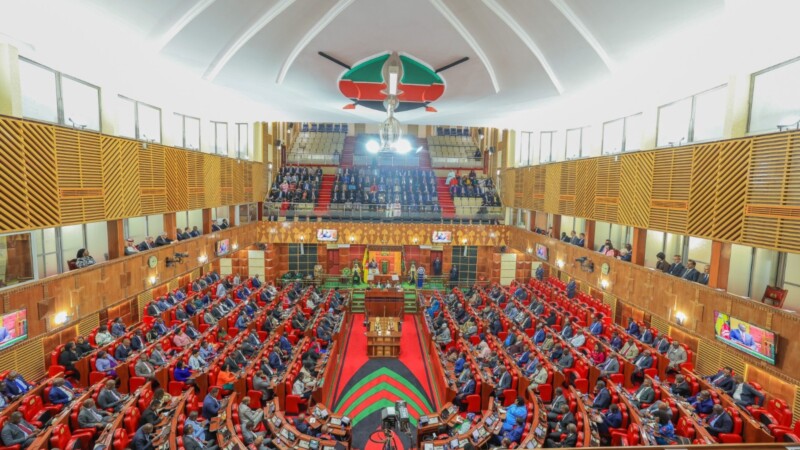
The petition has already attracted attention within the Senate.
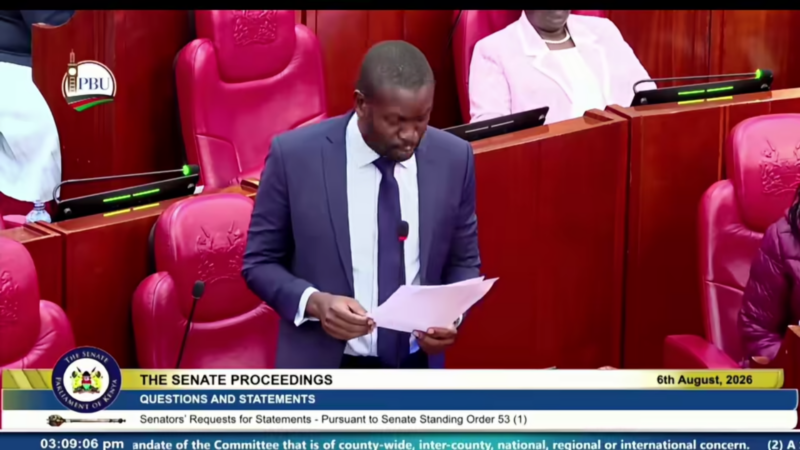
During deliberations, Nairobi Senator Edwin Sifuna, who serves on the Senate Committee on Agriculture, Livestock and Fisheries (Fisheries and Blue Economy), questioned both the justification and implementation of the levy.
According to proceedings, Sifuna challenged the rationale behind imposing the 5 per cent tax, sought clarification on the methodology used to arrive at the levy, and questioned whether sufficient consideration had been given to the economic and social realities facing cage fish farmers.
He also called for a review of the policy to ensure taxation of the aquaculture sector reflects the unique circumstances of fish farmers while safeguarding livelihoods and encouraging investment in the Blue Economy.
A Debate That Continues to Grow
The Senate petition is the latest development in a dispute that has steadily expanded beyond the courts.
The controversy began with the gazettement of the Fisheries Management and Development (Aquaculture) Regulations, 2024, which introduced the annual KSh50,000 commercial license fee and the 5 per cent ad valorem levy on landed fish from public waters.
The regulations were challenged in court by industry associations, prompting the High Court to suspend implementation in late 2024 while constitutional issues were determined.
During that period, the Ministry of Mining, Blue Economy and Maritime Affairs established a stakeholder task force that produced a Joint Communiqué proposing significant reforms, including replacing the flat license fee with a tiered structure and omitting the 5 per cent levy.
However, the High Court ultimately upheld the regulations in June 2026, allowing the government to proceed with implementation.
Industry groups have since argued that the agreed reforms contained in the Joint Communiqué were never presented before the court, and have continued to push for executive amendments to the regulations.
What It Means for the Blue Economy
The timing of the petition is significant.
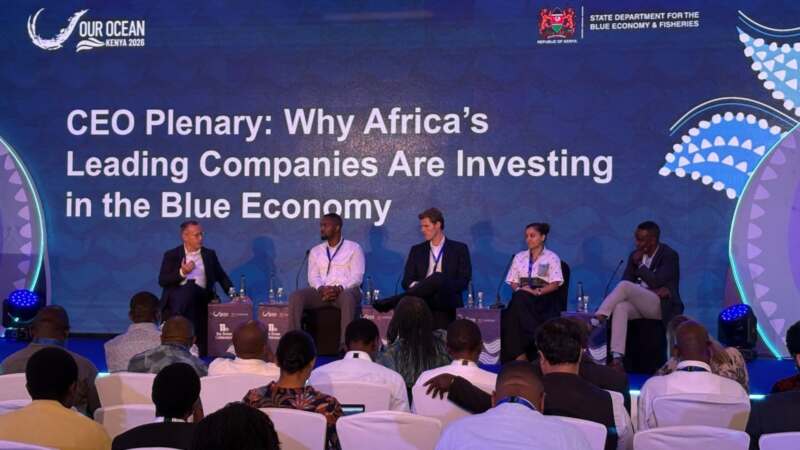
Kenya has positioned the Blue Economy as a key pillar of the Bottom-Up Economic Transformation Agenda and recently reaffirmed its commitment to sustainable fisheries during the 11th Our Ocean Conference held in Mombasa.

The conference culminated in the Mombasa Declaration, which called for stronger ocean governance, sustainable fisheries management, marine conservation and support for coastal and fishing communities.
Fish farmers argue that achieving these ambitions requires policies that encourage investment rather than increase production costs.
Government, on the other hand, maintains that stronger regulation, licensing and revenue collection are necessary to improve governance of fisheries resources and ensure long-term sustainability.