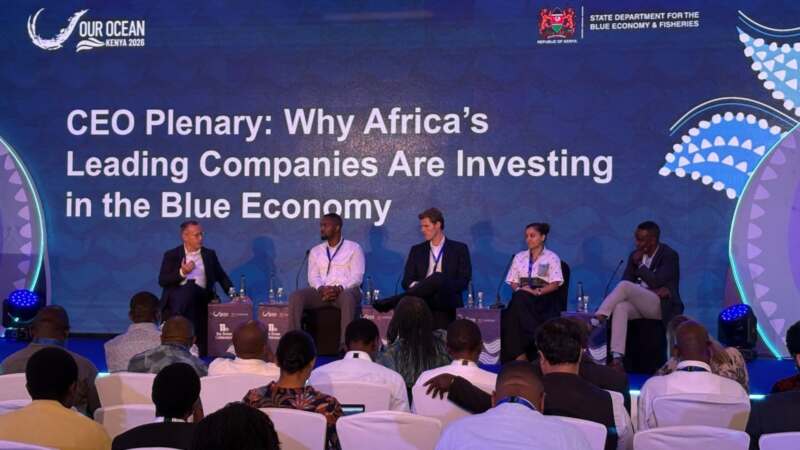
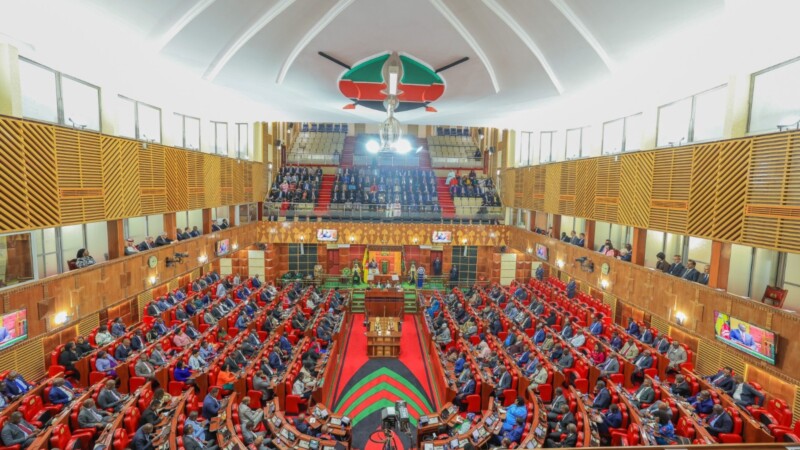
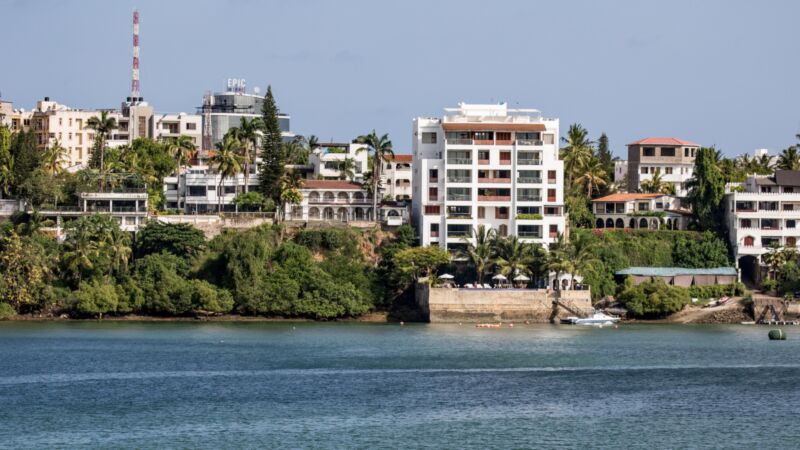
The word that kept surfacing at the 11th Our Ocean Conference in Mombasa was transparency.
Transparency in vessel tracking. Transparency in data. Transparency in catches. The Global Charter for Fisheries Transparency. Panama making its entire fleet's location data public. Kenya committing $200 million to put electronic monitoring on industrial vessels and AIS trackers on small-scale boats. AI satellites mapping 30,000 small-scale vessels along the African coastline. An app turning local fishers into frontline monitors reporting illegal activity to authorities.
The message from the conference was consistent the era of fishing in the dark is ending. Technology is finally shining a light on the ocean's most remote corners.
It is a powerful narrative. It is also worth thinking about carefully.
Because transparency is not a neutral force. It is a tool. And the value of any tool depends on whose hands it is in.
The Crisis Is Real
The numbers behind this transparency push are not in dispute.
Illegal, unreported and unregulated fishing costs Africa an estimated $11 to $13 billion every year. Globally the figure reaches $50 billion. Half a billion people depend on small-scale fisheries for food and income. Kenya's own Marine and Fisheries Research Institute data confirms that many priority fish species in Kenyan waters are already being harvested at unsustainable levels.
This is not a bureaucratic problem. It is a livelihood crisis playing out in slow motion along coastlines across the continent.
Kenya's response, announced at OOC11, is the most ambitious fisheries commitment the country has made. A $1 billion blue economy roadmap. Electronic monitoring on all industrial vessels. AIS trackers on small-scale boats. Five new fish landing sites. A processing plant at Shela beach. The Msambweni-Vanga Seascape legally designated as a Ramsar site protecting 71,600 hectares. Fifteen community co-management areas formalised. A joint agreement with Tanzania on the Kwale-Tanga Transboundary Marine Conservation Area.
The intent is right. The investment is significant. The question is whether it is structured to benefit the people it is supposed to protect.
The Technology Doing the Watching
The tools assembled around this transparency push are genuinely impressive.
The DASE mobile app, developed by the Environmental Justice Foundation, has trained almost 700 fishers in Cameroon, Senegal and Thailand to capture geotagged photos and videos of suspected illegal fishing using smartphones. The evidence uploads to a system that generates vessel alerts for authorities. In Thailand it has already led to industrial vessel owners paying compensation to local communities for gear damage. The fisher becomes the monitor.
Meanwhile a partnership between Global Fishing Watch and the Minderoo Foundation is using AI and satellite imagery to map the entire global fleet including small-scale vessels that have historically been invisible to regulators. Recent analysis detected over 30,000 small-scale vessels along the African coastline, identifying exactly where they compete with industrial fleets for the same resources.
Panama has committed to making its entire domestic fleet's movement data publicly available a decision now being called the global gold standard for fisheries transparency.
The DASE app model works because it gives power to communities that previously had no way to document what was being done to them. That is the right direction. The satellite mapping tools, used with community knowledge and consent, could finally document industrial IUU activity at a scale that manual enforcement never could.
The technology is not the problem. What matters is who controls it and whose interests it is oriented toward.
The Honest Question
When AI satellites map 30,000 small-scale vessels along the African coastline who owns that data? Who decides how it is used?
When Kenya equips small-scale fishing boats with AIS trackers that broadcast their location continuously are the fishers being consulted about what that means for how they operate? Or are they simply being made permanently visible to a regulatory system that has not always protected their interests?
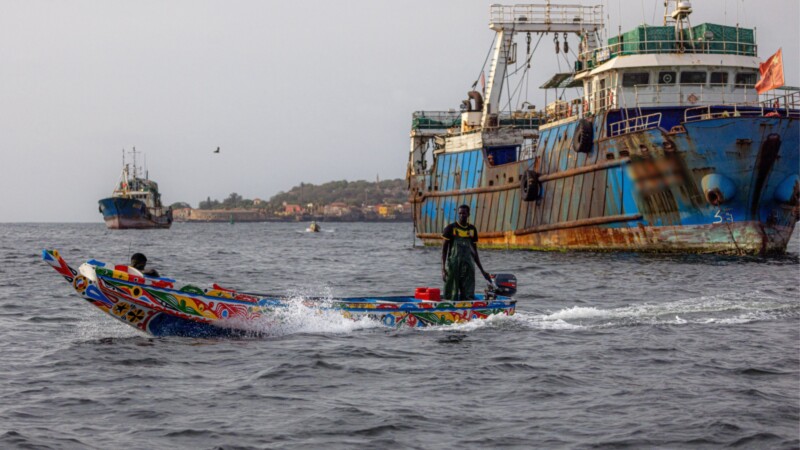
The small-scale fisher in a wooden boat with a gillnet is not the $13 billion IUU problem. The overwhelming majority of that cost comes from large industrial vessels many foreign flagged using sophisticated techniques to evade detection. They go dark in territorial waters. They transfer catches at sea. They reflag between jurisdictions to exploit gaps in the law.
The industrial vessel operator with resources to evade monitoring has been doing so for decades. Stopping them requires political will and legal frameworks with teeth neither of which is a technology problem.
Yet the surveillance infrastructure being built will make the small-scale fisher the most visible and most easily monitored participant in the system. That imbalance deserves to be named.
What Kenya's Investment Actually Buys
Monitoring tells you what is happening. It does not, by itself, change what is happening.
For the $200 million surveillance investment to produce real conservation outcomes, Kenya needs enforcement capacity that matches what is being built. Judicial processes that can act on the evidence. Political will to go after well-connected industrial operators when the data shows violations. And co-management frameworks that give fishing communities genuine authority not nominal participation.
The $8.5 million for fish landing sites and $7.3 million for the Shela processing plant are the investments that will most directly improve fisher incomes. They are also the smallest line items in a $1 billion roadmap. More investment at that level in the value chain, in community infrastructure, in what fishers actually take home would strengthen the credibility of the broader commitment significantly.
What OOC11 Got Right
The Mombasa Declaration 16 African governments aligning on IUU accountability including Ghana, Cameroon and Gabon is meaningful. Kenya used its hosting platform well to drive that outcome.
The co-management model is the right structural approach. Legally formalising community management areas and centering local fishers in governance decisions addresses the power imbalance that technology alone cannot fix. If implemented with genuine community authority, it changes the terms of the conversation.
The technology tools, used transparently and with community consent, have real potential. The question is governance who controls the data, who can act on it, who is protected by the system and who is exposed by it.
The Test That Matters
Every transparency initiative, every technology deployment and every financial commitment announced at OOC11 should be tested against one question.
Does this make the half-billion people who depend on small-scale fisheries more food secure, more economically resilient and more capable of advocating for their own interests?
Not does this generate better datasets? Not does this demonstrate political commitment? But does this reach the person on the water?
OOC11 answered the technology question convincingly.
The governance question is still being written. And the communities fishing Kenya's waters every morning will be living with the answer long after the conference tents in Mombasa came down.