There is money growing in Kenya's mangrove swamps.
Not metaphorically. Not eventually. Right now, the tangled root systems sitting in the tidal zones along Kenya's coast are absorbing and storing carbon at a rate that makes them among the most financially valuable ecosystems on the planet and the world is finally starting to pay for that service.
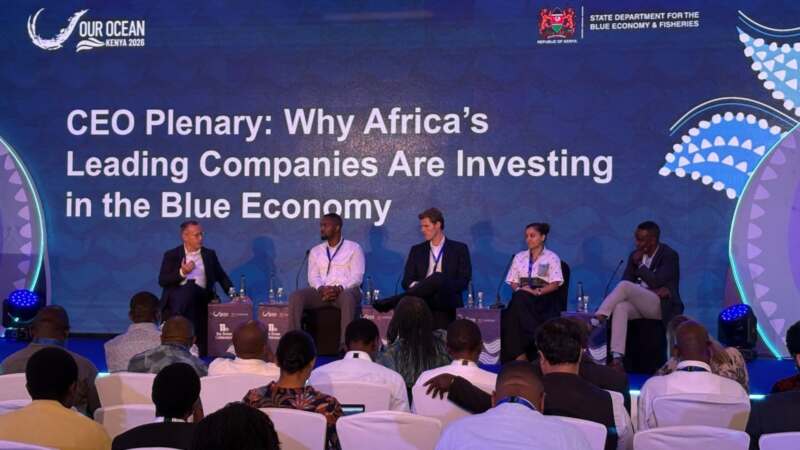
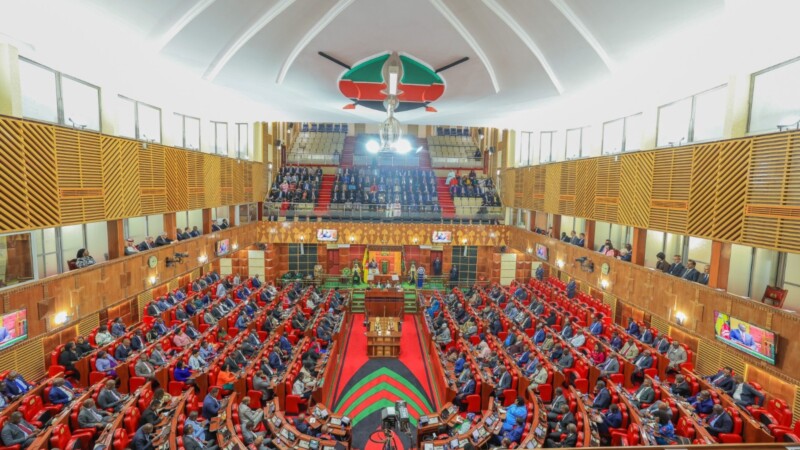
At the 11th Our Ocean Conference in Mombasa, Kenya announced its first National Blue Carbon Framework a strategy to mobilise $250 million in climate finance over the next decade by putting a credible economic value on what its coastal ecosystems have been quietly doing for centuries.
To understand why that announcement matters, you first need to understand what blue carbon actually is and why the world is suddenly willing to pay for it.
What Is Blue Carbon?
Carbon is the currency of the climate crisis.
When fossil fuels burn, they release carbon dioxide into the atmosphere. Too much carbon dioxide traps heat. Trapped heat changes the climate. The fundamental challenge facing humanity is finding ways to reduce how much carbon goes into the atmosphere and increase how much gets pulled out and stored.
Forests do this. Trees absorb carbon dioxide as they grow and store the carbon in their wood, roots and soil. That is why forests are described as carbon sinks they sink carbon out of the atmosphere and hold it.
Blue carbon is the same idea applied to coastal and ocean ecosystems specifically mangroves, seagrass meadows and tidal saltmarshes.
And here is where it gets interesting.
Mangroves and seagrass do not just store carbon the way a forest does. They store it faster, in larger quantities, and for longer periods. A mangrove forest can sequester carbon up to ten times faster per hectare than a tropical rainforest. Seagrass meadows cover less than 0.2% of the ocean floor but store approximately 10% of the carbon buried in ocean sediment every year. When blue carbon ecosystems are destroyed through coastal development, pollution or unsustainable land use that stored carbon does not stay stored. It releases back into the atmosphere, turning a carbon sink into a carbon source almost overnight.
This is why the world is paying attention.
Coastal ecosystems are among the most carbon-dense environments on earth. They are also among the most threatened. Globally an estimated 35% of mangroves, 29% of seagrasses and 25% of saltmarshes have been lost in recent decades. Every hectare lost is both an ecological and a climate setback.
The blue carbon market exists because of a simple logic if we can quantify how much carbon a healthy coastal ecosystem stores, we can create a financial mechanism that pays for keeping it healthy. Companies and governments that need to offset their carbon emissions can purchase blue carbon credits generated by verified conservation and restoration projects. The money flows to the communities and governments protecting the ecosystems. The ecosystems stay intact. The carbon stays stored.
That is the theory. Kenya is now betting $250 million that the practice can work at national scale.
Kenya's Coastal Assets
Kenya is not starting from nothing.
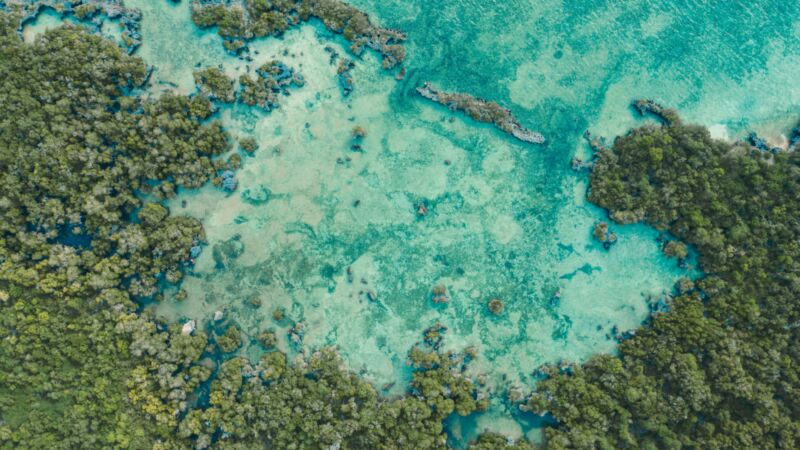
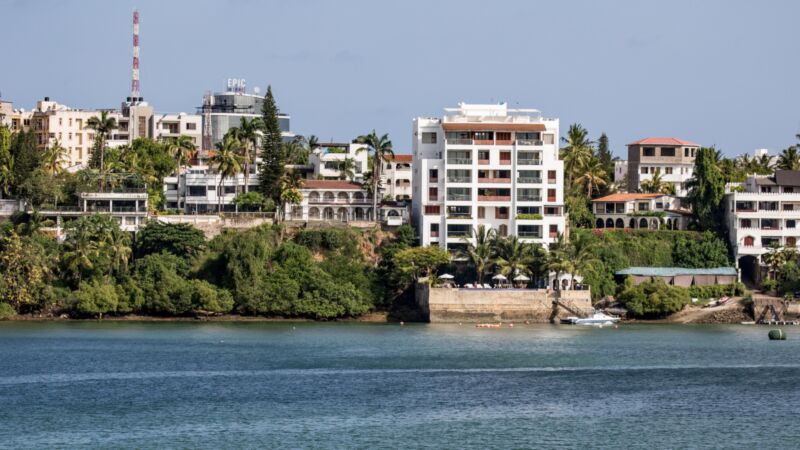
The country's coastline holds significant blue carbon assets that have been undervalued for decades in purely economic terms. Mangrove forests cover approximately 61,000 hectares along the Kenyan coast from Lamu in the north to the Ramisi River in the south. Seagrass meadows extend across 39,000 hectares of shallow coastal waters. Together these ecosystems support fisheries, protect coastlines from erosion and storm surge, provide nursery habitat for commercially important marine species and store carbon at rates that are now being precisely quantified for the first time.
The Msambweni-Vanga Seascape a stretch of coastline in southern Kenya encompassing mangroves, seagrass, coral reefs and tidal flats is being formally designated as a Ramsar Site by 2027, providing international legal protection to 71,600 hectares of critical coastal wetland. Ramsar designation matters because it creates an internationally recognised framework for conservation that strengthens the credibility of any blue carbon credits generated from the area.
The East African Wildlife Society is working to integrate seagrass specifically into Kenya's national accounting frameworks meaning that for the first time, seagrass meadows will be counted as genuine national assets in the same way that agricultural land or mineral deposits are counted. That accounting shift has profound implications for how development decisions along the coast are made and evaluated.
The $250 Million Question
Kenya's National Blue Carbon Framework is designed to mobilise $250 million in blended climate finance over the next decade.
Blended finance is worth explaining because it is central to how this works in practice.
Pure private investment in conservation is difficult to attract because the financial returns are uncertain and the timelines are long. Pure public funding is insufficient at the scale required. Blended finance mixes public funding, development bank lending, philanthropic capital and private investment in ways that use public and philanthropic money to reduce the risk for private investors making the overall package attractive enough to mobilise capital that would not otherwise flow to conservation.
The $250 million target is not a government budget line. It is a mobilisation target an expectation that the framework will create conditions attractive enough to pull in that level of combined investment from multiple sources over ten years.
The global momentum behind this approach is building. The Marine 30x30 Finance Initiative backed by a $10 million commitment from the Minderoo Foundation is helping pilot nations including the Dominican Republic and Seychelles develop financial roadmaps that treat blue carbon as a primary revenue stream. Indonesia is developing a blue carbon model on the North Coast of Java. Portugal is implementing methodologies to quantify carbon sequestration within its maritime space.
Kenya is joining a small but growing group of countries that are treating their coastal ecosystems not as conservation costs but as productive financial assets. The difference in that framing is not cosmetic. It changes who sits at the table when coastal land use decisions are made.
Who Actually Benefits?
This is the question that determines whether blue carbon becomes a genuine tool for coastal community development or another layer of external capital flowing through coastal areas without reaching the people who live in them.
The OOC11 framing was explicit blue carbon projects only succeed if they benefit local residents. Kenya's framework reflects this in several ways.
The Kenyan Youth Biodiversity Network is bringing over 100 acres of mangroves under active community-led restoration by 2030 ensuring that the labour, the knowledge and ultimately the economic benefit of restoration is rooted in the communities doing the work. Kenya is also planning to scale seaweed farming from 300 to 8,600 acres a regenerative blue economy intervention that creates direct livelihoods for coastal communities while contributing to ecosystem health. Vital Ocean is deploying Digital Twin technology to model and guide the restoration of 100,000 hectares of marine environments globally, providing the kind of precise spatial data that makes blue carbon projects verifiable and therefore credible to carbon markets.
The community benefit question is not fully resolved by intention alone. Carbon markets have a mixed track record globally on genuinely sharing financial returns with the communities whose land and labour underpin the projects generating credits. The history of conservation finance in Africa includes examples where communities were told they were beneficiaries of projects that were primarily structured to benefit external investors.
Kenya's framework will be judged by whether the fishing communities in Msambweni, the mangrove harvesters in Lamu and the seagrass dependent fishers along the south coast see meaningful, direct financial returns from the blue carbon value their ecosystems generate. The framework creates the conditions for that to happen. Whether it does will depend on implementation choices that have not yet been made.
Why This Matters Beyond Kenya
The blue carbon conversation at OOC11 was not just about Kenya.
It was about whether Africa's coastal nations can collectively position themselves as suppliers of a climate solution the world urgently needs on terms that build African institutional capacity, generate African community wealth and give African governments meaningful agency in the global carbon governance frameworks that are still being designed.
The Global Charter for Fisheries Transparency announced at OOC11 and the broader push toward evidence-based policymaking in ocean governance both point in the same direction toward a world where the value of what African coastal ecosystems do is counted, verified and compensated rather than taken for granted.
Blue carbon is one of the clearest available mechanisms for that compensation. A healthy mangrove in Kwale does real work for the global climate. The global climate benefits from that work. The question finally being asked seriously at the right tables is whether the people protecting that mangrove get paid for the service they are providing to the rest of the world.
OOC11 in Mombasa put Kenya's answer on record.
$250 million. 61,000 hectares of mangroves. 39,000 hectares of seagrass. A legal framework. A 2030 deadline.
The coastal forest is no longer just a forest.
It is an asset. And Kenya has decided it is time to treat it like one.