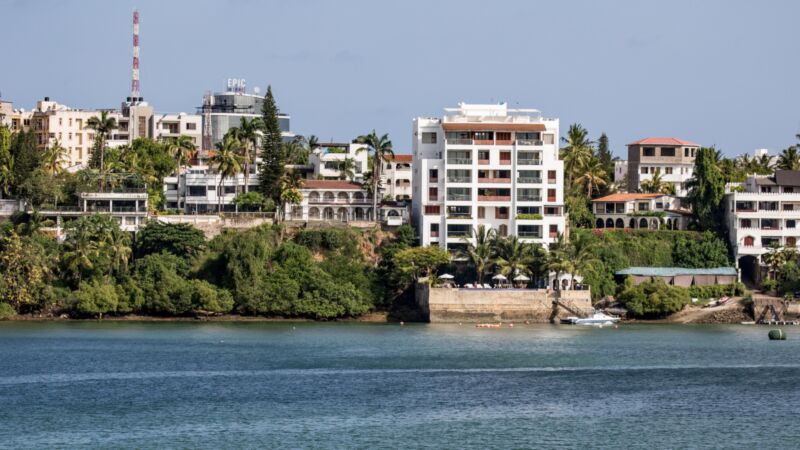
There is a quiet revolution growing on Kenya's south coast.
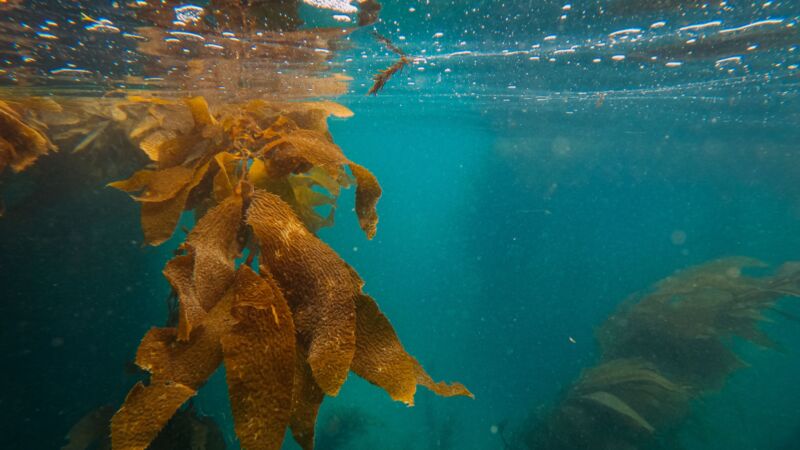
It does not make noise. It does not require heavy machinery or foreign expertise or a university degree to participate in. It grows underwater, in the shallow tidal zones that coastal communities have worked for generations, and it is worth more than most people fishing beside it currently realise.
Seaweed farming is not a new idea in Kenya. Communities in Shimoni, Vanga, Gazi and along the Kwale coastline have been cultivating it for years primarily red algae varieties like Eucheuma denticulatum and Kappaphycus alvarezii selling to processors who supply the global market for carrageenan, a natural thickening agent used in everything from toothpaste to ice cream to pharmaceutical products.
What is new is the scale of ambition Kenya just publicly committed to.
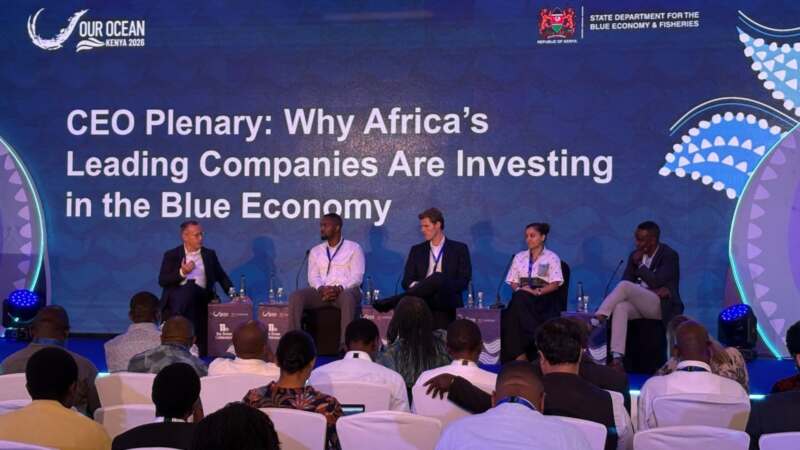
At the 11th Our Ocean Conference in Mombasa, the Government of Kenya committed $10 million to scale seaweed farming from approximately 300 acres to 8,600 acres along the Kenyan coast.
That is a 2,766% increase in acreage.
If it is delivered, it will not just expand an industry. It will restructure the economic options available to thousands of coastal households particularly women, who make up the majority of Kenya's seaweed farming community.
What Seaweed Farming Actually Is
Before the numbers, the basics.
Seaweed farming in Kenya is fundamentally a low-technology, community-accessible livelihood activity. Farmers tie seedlings of cultivated seaweed varieties onto lines suspended between stakes in shallow intertidal or sub-tidal areas. The seaweed grows along the lines, fed by nutrients in the seawater, typically reaching harvest size in six to eight weeks. Farmers wade out at low tide, harvest the mature seaweed by hand, dry it on raised racks or lines on the beach, and sell the dried product to collection agents or processors.
The capital requirements to start are low. The technical knowledge required is accessible. The physical infrastructure lines, stakes, basic drying racks is inexpensive. And unlike many blue economy activities that require either vessels, gear or significant financial outlay, seaweed farming can be started on a small plot of suitable coastline with a few thousand shillings and a week of learning.
That accessibility is precisely why it has historically attracted women farmers who may have less access to fishing vessels and gear but have direct access to intertidal areas and the time management flexibility that tending seaweed lines requires.
The challenge has never been whether coastal communities can farm seaweed. It has been whether the economic returns are sufficient, consistent and fairly distributed enough to make it worth building a livelihood around.
The Current Reality
Kenya's current seaweed farming area of approximately 300 acres represents a fraction of the biologically suitable coastline available.
Studies by the Kenya Marine and Fisheries Research Institute have identified extensive areas along the south coast particularly in Kwale County between Shimoni and Vanga as highly suitable for seaweed cultivation based on water temperature, salinity, current patterns and depth profiles. Similar potential exists in parts of Kilifi and Lamu counties further north.
The farmers currently working those 300 acres face a set of familiar constraints that have kept the industry from growing organically to the scale its biological potential would suggest.
Price volatility is the most significant. The global carrageenan market which drives demand for Kenya's primary seaweed varieties goes through cycles of oversupply that compress farm-gate prices to levels that make the labour barely worthwhile. When buyers from processing companies arrive with low prices, farmers have limited negotiating power and no alternative market to turn to. The income that looked attractive when they started farming can deteriorate to the point where other activities become more economically rational.
Disease is the second major constraint. Ice-ice disease a stress response in seaweed triggered by temperature fluctuations, high irradiance or low salinity causes the thallus to bleach and rot, destroying entire farm lines in days. As Indian Ocean surface temperatures rise with climate change, ice-ice incidence is increasing along parts of the Kenyan coast, adding production risk that farmers carry entirely themselves.
Post-harvest infrastructure is the third constraint. Drying seaweed requires consistent sunshine and clean surfaces elevated from sand contamination. Many farmers dry on the ground or on basic lines, resulting in quality downgrades that reduce the prices they receive. A consistent clean dry product commands premium prices. Getting there requires basic infrastructure raised drying racks, shading for controlled drying that most smallholder farmers do not have.
And market access beyond the single-channel buyer model is the fourth. Most Kenyan seaweed farmers sell to one buyer. That single buyer sets the price. When that buyer stops buying due to global market shifts, company restructuring or logistics changes the farmer has nowhere else to go. The vulnerability embedded in that dependency has caused seaweed farming communities to collapse entirely in some areas when the buyer relationship broke down.
Kenya's $10 million commitment needs to address all four of these constraints not just expand the acreage.
Why 8,600 Acres Changes the Math
Scale does something to markets that small volumes cannot.
At 300 acres, Kenya's seaweed production is a supplier to the global carrageenan market present but not significant enough to command terms. At 8,600 acres, Kenya becomes a volume player. Volume attracts more buyers. More buyers create competition for supply. Competition drives prices up. Higher prices make farming more sustainable.
Scale also makes processing investment viable. A domestic seaweed processing facility one that takes raw dried seaweed and produces semi-refined or refined carrageenan requires consistent raw material supply to operate economically. At 300 acres Kenya cannot guarantee that supply. At 8,600 acres the calculation changes entirely. Domestic processing would mean Kenya captures more of the value chain rather than exporting raw material for others to process and sell at multiples of the farm-gate price.
The math on that value capture is significant. Raw dried seaweed currently sells at farm gate for roughly KSh 30 to 50 per kilogram depending on market conditions. Semi-refined carrageenan the product that emerges from basic processing sells at multiples of that figure on the international market. The difference between those two prices is value that currently leaves Kenya and goes to processors in Europe, China and the Philippines. Domestic processing infrastructure keeps that value here.
Scale also enables market diversification beyond carrageenan. Seaweed has multiple market applications food ingredients, cosmetics, biostimulants for agriculture, animal feed, bioplastics and increasingly as a feedstock for carbon sequestration research. None of these alternative markets are currently accessible to Kenya's small-scale farming community because the volumes are insufficient and the product specifications are not being met. At 8,600 acres with organised quality standards and diversified varieties, they become accessible.
The Women at the Centre of This
Any honest account of Kenya's seaweed farming sector has to be centred on the women who built it.
Along Kenya's south coast, seaweed farming has historically been a women's activity not by formal designation but by the practical reality of who had access to intertidal areas, who was excluded from vessel-based fishing and who needed a livelihood that could be worked around domestic responsibilities.
Those women built the knowledge base that exists. They developed the farming techniques adapted to local conditions. They navigated the market relationships with buyers. They absorbed the losses when disease struck and the price collapsed and they kept farming anyway because the alternatives were worse.
A $10 million scale-up commitment that does not centre those women in its design and delivery is a $10 million commitment that will not reach its potential. Not because women are the only ones who should benefit seaweed farming at 8,600 acres will create economic opportunity for everyone along the coast. But because the knowledge, the community relationships and the legitimate claim on this expansion belongs most directly to the communities who built the sector at small scale.
Groups like the Mwani Women's Group in Shimoni, the Gazi Bay seaweed farmers, and the organised farming communities in Vanga represent exactly the foundation on which a sustainable scale-up should be built. Their inclusion in design, in governance of the expansion, in access to the processing value chain is not a social responsibility consideration. It is a practical requirement for building something that works.
What $10 Million Needs to Buy
The commitment is $10 million. The target is 8,600 acres. The timeline sits within Kenya's 2025-2030 Blue Economy Strategy framework.
For those numbers to produce the livelihood transformation they suggest, the $10 million needs to be structured carefully.
Site identification and ecological assessment comes first. Not all coastline suitable for seaweed is equally suitable. Water quality, current patterns, conflict with other marine activities and community land tenure all need to be mapped before expansion begins. Poorly sited farms produce poor yields and generate community conflict. Getting the spatial planning right is the foundation.
Seedstock supply chains need to be developed alongside site expansion. Scaling to 8,600 acres requires enormous quantities of planting material. Currently Kenya's seedstock supply is informal and localised. A centralised seedstock nursery system potentially linked to the National Marine Hatchery commitment at Shimoni that Kenya also made at OOC11 would provide consistent, disease-resistant planting material at the scale the expansion requires.
Post-harvest infrastructure investment needs to accompany acreage expansion acre for acre. Raised drying racks, storage facilities and collection points need to exist before farmers plant not after they harvest. The quality problem that suppresses farm-gate prices is solvable with relatively modest infrastructure investment per farming community.
Market development needs to run parallel to production expansion. The Kenya Plant Health Inspectorate Service, the Kenya Bureau of Standards and trade promotion agencies need to be working on quality certification, international market access and domestic processing investment simultaneously with the farming expansion. A market-pull approach where buyers are already waiting for the expanded production is structurally stronger than a supply-push approach where farmers expand and then look for buyers.
And financial services for seaweed farmers affordable credit to invest in equipment, insurance against disease and climate losses, savings mechanisms for income smoothing need to be part of the package. The vulnerability that makes seaweed farming unsustainable for many households is as much a financial access problem as a production or market problem.
The Climate Bonus Nobody Is Talking About Enough
There is a dimension of seaweed farming's value that the livelihood conversation often crowds out.
Seaweed absorbs carbon dioxide as it grows. Seaweed farming at scale contributes to coastal ecosystem health by absorbing nutrients that would otherwise cause harmful algal blooms. Some seaweed varieties, when included in livestock feed, dramatically reduce methane emissions from cattle a finding that has attracted significant research investment globally.
Kenya's blue carbon framework commitment at OOC11 focused primarily on mangroves and seagrass. Seaweed farming, done well and at scale, belongs in that conversation too. The potential to generate blue carbon credits from verified seaweed cultivation providing an additional revenue stream for farmers beyond the commodity market is an emerging area of climate finance that Kenya should be positioning itself to access.
If the $10 million seaweed commitment is designed with carbon measurement and verification built in from the start, Kenya's 8,600 acres of seaweed farms become eligible for carbon credit revenue on top of commodity sales. That additional income layer is precisely what the price volatility problem requires a second revenue stream that stabilises farm economics when carrageenan prices fall.
What Success Looks Like
Five years from now, if Kenya's seaweed commitment delivers what it promises, the picture along the south coast should look different in measurable ways.
A woman in Shimoni who farms two acres of seaweed should be earning a reliably higher income than she earns today not because the commodity price happened to be good that season, but because she has access to better seed stock, better post-harvest infrastructure, multiple buyers competing for her product and potentially carbon credit revenue on top of her commodity sales.
Processing facilities ideally community-owned or structured with genuine community equity should exist along the coast, employing people from farming communities in value-adding activity rather than exporting that employment to processors elsewhere.
Kenya's seaweed exports should carry a Made in Kenya quality mark that commands premium prices in international markets and signals to global buyers that Kenya is a reliable, volume supplier of certified product.
And the 8,600 acres should be producing measurable ecosystem services nutrient absorption, habitat provision, carbon sequestration that are being counted in Kenya's national blue carbon accounts and potentially generating verified carbon credits flowing back to farming communities.
That is the vision the commitment points toward.
Getting there requires not just the $10 million but the institutional coordination, the community-centred design and the market development work that turns an acreage target into a livelihood transformation.
The seed has been planted in Mombasa.
What grows from it depends on what happens next on the ground.