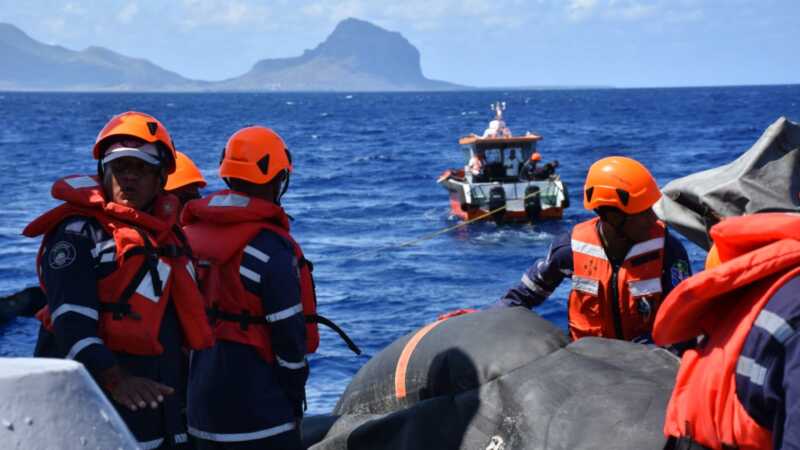
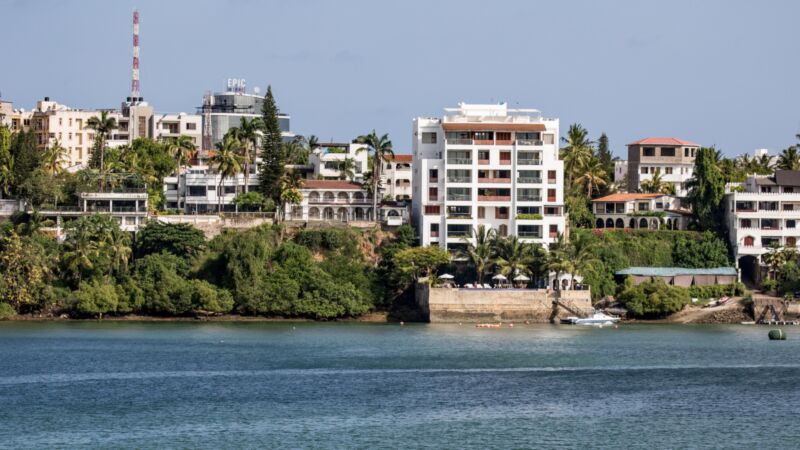
The Western Indian Ocean has never been a quiet sea.
From the Somali piracy crisis that peaked in the early 2010s to the more recent disruptions in the Red Sea and Gulf of Aden that have rerouted global shipping through East African waters, the maritime security environment surrounding Kenya has been in constant motion. The threats have evolved. The actors have changed. The stakes for Kenya's trade, its fishing communities, its coastal populations and its ambitions as a blue economy nation have only grown.
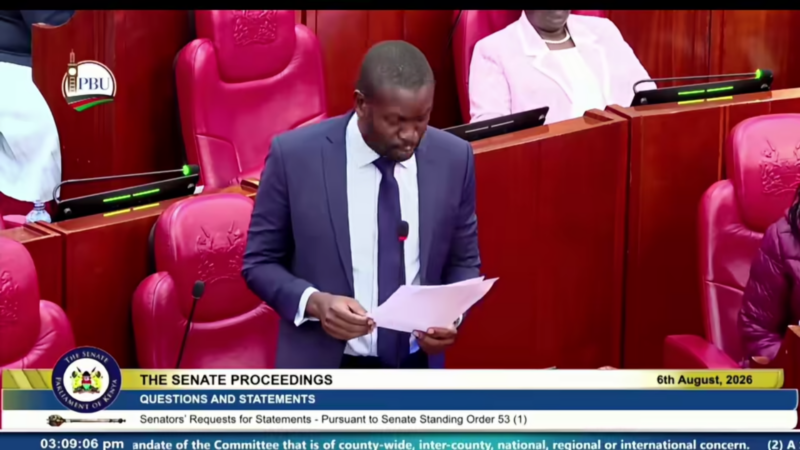
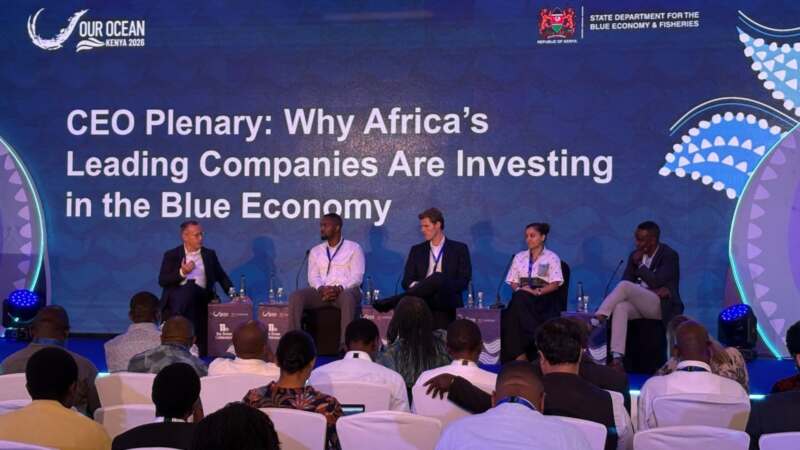
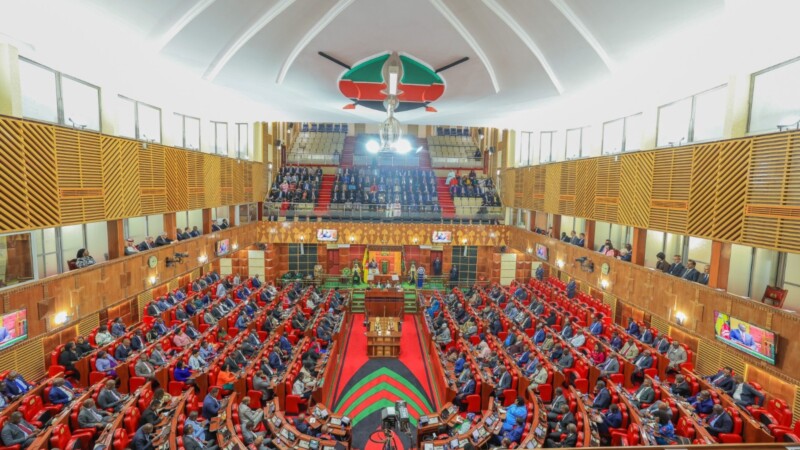
At the 11th Our Ocean Conference in Mombasa, Kenya used the global stage to make its most comprehensive maritime security commitment package to date.
A National Maritime Security Strategy. A National Maritime Information Sharing Centre. Continued leadership of the Djibouti Code of Conduct Working Group 3 on Cooperation and Coordination of Operations. Alignment with international frameworks. Enhanced information sharing hubs. Active participation in regional security architecture.
Taken together these commitments signal something important Kenya is not positioning itself as a passive participant in Western Indian Ocean security. It is positioning itself as a regional leader.
Whether that positioning translates into operational reality depends on decisions being made right now in ministries, defence establishments and regional coordination centres that rarely make the front page.
Why Maritime Security Is a Blue Economy Issue
Maritime security is sometimes treated as a separate conversation from the blue economy a defence and law enforcement matter rather than an economic development one.
That separation is false and the communities living along Kenya's coast understand it instinctively.
When illegal fishing vessels operate in Kenyan waters without licenses, underreporting catches and competing directly with small-scale fishers for the same fish stocks, that is a maritime security failure with direct economic consequences for fishing households in Shimoni, Malindi and Lamu.
When drug trafficking routes move through Kenya's maritime space as they do the corruption and instability that follow undermine the governance environment that legitimate blue economy investment requires.
When piracy or armed robbery at sea even at reduced levels compared to the peak years creates insurance risk premiums for vessels transiting the Western Indian Ocean, the cost flows through to Kenya's import-dependent economy in ways that every household feels.
And when the Red Sea disruptions that have rerouted global shipping through East African waters create a surge in vessel traffic through Kenyan waters as happened in 2025 and 2026 the absence of adequate maritime domain awareness infrastructure means Kenya cannot fully capitalise on or manage the opportunity that surge represents.
Maritime security is not a peripheral concern for a country with 600 kilometres of Indian Ocean coastline, a deep water port at Mombasa handling a significant share of East Africa's trade, a growing blue economy agenda and ambitions for Lamu to become a regional logistics hub.
It is foundational infrastructure for everything else Kenya is trying to build.
What Kenya Actually Committed To
The maritime security commitments Kenya made at OOC11 are worth examining individually because they represent different layers of a security architecture that needs to function as a system.
A National Maritime Security Strategy
Kenya committed to developing a National Maritime Security Strategy aligned with the Djibouti Code of Conduct and the Jeddah Amendment the two primary regional frameworks for countering piracy and illicit maritime activities in the Western Indian Ocean and Gulf of Aden.
A national strategy matters because without one, maritime security responses are reactive and fragmented individual agencies responding to individual incidents without a coherent framework connecting those responses to national objectives. Kenya's Kenya Defence Forces, Kenya Coast Guard, Kenya Maritime Authority, Kenya Fisheries Service and Kenya Revenue Authority all have maritime mandates that currently operate with varying degrees of coordination. A National Maritime Security Strategy provides the overarching framework that aligns those agencies, clarifies their respective roles and establishes shared objectives.
The alignment with the Djibouti Code of Conduct is significant. The DCoC now signed by 21 states in the region is the primary multilateral framework for maritime security cooperation in the Western Indian Ocean. Kenya's active participation in its Working Group 3, which focuses on operational cooperation and coordination at sea, gives Kenya both obligations and influence within that framework. A domestic strategy aligned with DCoC commitments strengthens Kenya's position as a credible regional partner.
A National Maritime Information Sharing Centre
This commitment is operationally the most significant of the three.
Maritime domain awareness knowing what is happening in your maritime space in real time is the foundational capability that all other maritime security functions depend on. You cannot interdict illegal fishing vessels you cannot see. You cannot respond to security incidents you do not know are happening. You cannot coordinate with regional partners if you do not have the information infrastructure to share and receive intelligence in real time.
Kenya currently has maritime surveillance capabilities distributed across multiple agencies with limited systematic information sharing between them. The Kenya Coast Guard operates patrol vessels. The Kenya Maritime Authority monitors vessel traffic in and around Mombasa port. The Kenya Fisheries Service has monitoring responsibilities for fishing vessels. The Kenya Defence Forces maintain naval capabilities in the Indian Ocean.
These capabilities exist in relative silos. A dedicated National Maritime Information Sharing Centre a facility that aggregates surveillance data, vessel tracking information, intelligence inputs and regional partner feeds into a single operational picture transforms those siloed capabilities into a coordinated maritime domain awareness system.
The model for what this can look like already exists in the region. The Regional Maritime Information Fusion Centre in Madagascar and the Regional Coordination Operations Centre in Seychelles are both DCoC-linked facilities that Kenya has been a partner of. A national centre does not replace those regional facilities it connects to them, feeding national data into the regional picture and pulling regional intelligence into Kenya's national awareness.
For Kenya's fishing communities, a functional maritime information sharing centre has direct practical implications. When illegal industrial fishing vessels are detected in Kenya's EEZ, coordinated response becomes possible. When distress signals are received from small-scale fishers far offshore, coordinated search and rescue becomes faster and more effective. When suspicious vessel movements are detected near Kenya's coast, the information reaches the right agency in time to act.
Leadership of DCoC Working Group 3
Kenya's continued leadership of Working Group 3 on Cooperation and Coordination of Operations at sea within the Djibouti Code of Conduct is a reaffirmation of an existing role rather than a new commitment.
But reaffirming it at OOC11, on the global stage, carries its own significance.
Working Group 3 is the operational heart of DCoC the mechanism through which member states coordinate actual maritime security operations across national boundaries. Kenya chairing that working group means Kenya is shaping how regional maritime security cooperation works in practice which information sharing protocols are adopted, which coordination mechanisms are developed, which operational priorities are elevated.
That is meaningful regional influence. It also carries real responsibilities. Kenya's leadership of WG3 is only as credible as Kenya's own domestic maritime security capabilities. A national strategy and a national information sharing centre are not just domestic governance improvements they are the infrastructure that makes Kenya's regional leadership role substantively credible rather than nominally held.
The Regional Context Kenya Is Operating In
Kenya's maritime security commitments do not exist in isolation. They sit within a regional security environment that is more complex and more consequential than it has been at any point in the past decade.
The Red Sea crisis triggered by Houthi attacks on commercial shipping in the Gulf of Aden has fundamentally disrupted global shipping patterns. Vessels that would ordinarily transit through the Suez Canal are rerouting around the Cape of Good Hope or seeking alternative port options. Lamu Port's surge in vessel traffic in early 2026 over 120 vessels in four months including the largest ship ever to call at an East African port is a direct consequence of that disruption.
That rerouting creates opportunity for Kenya. More vessel traffic through Kenyan waters means more potential port revenue, more maritime services demand and more strategic significance for Kenya's maritime infrastructure. But it also creates security management complexity. More vessels in Kenyan waters means more to monitor, more potential incidents to respond to and more pressure on maritime surveillance and enforcement capabilities that were not designed for current traffic volumes.
The European Union's commitment at OOC11 of €16 million for the second phase of its maritime security programme in the Southern Red Sea, Horn of Africa and Gulf of Aden region the Red Sea-HoA Programme II signals that international partners see continued investment in regional maritime security as necessary and justified. Kenya's ability to access and benefit from that kind of international security cooperation investment depends partly on having the domestic institutional framework the strategy, the information sharing centre, the regional coordination role that makes Kenya a credible and capable partner.
Japan committed at OOC11 to enhancing maritime security across the Indo-Pacific through equipment provision and capacity building. Canada committed to supporting regional fisheries crime investigation capacity under the DCoC Regional Plan of Action. These commitments from external partners create an investment environment that Kenya's domestic commitments position it to access more effectively.
The Africa Blue Security Podcast Connection
Blue Radio has been covering maritime security from a uniquely positioned platform.
The Africa Blue Security Podcast which Blue Radio produces and which has been building regional reach since its launch sits at the intersection of exactly the issues that Kenya's OOC11 maritime security commitments address. IUU fishing. Piracy and maritime crime. Regional security cooperation. The relationship between maritime security and blue economy development. The policy frameworks governing maritime space.
The conversations we have been hosting on that platform with maritime security experts, policy makers, regional coordination officials and community representatives have consistently pointed to the same structural gap that Kenya's OOC11 commitments are now beginning to address.
The gap between what exists on paper the DCoC, the regional coordination centres, the bilateral agreements, the national legislation and what exists operationally on the water.
Kenya's commitment to a National Maritime Security Strategy and a National Maritime Information Sharing Centre are investments in closing that gap at the national level. Their success will depend on the same factors that determine the success of every institutional commitment sustained funding, political continuity, inter-agency cooperation and the genuine integration of community-level maritime stakeholders including fishing communities into the security architecture being built.
Fishing communities are not just beneficiaries of maritime security. They are its most distributed and most continuously present monitoring network. A fisherman three miles offshore sees things that no satellite or patrol vessel captures with the same regularity or local contextual understanding. Integrating fishing communities into maritime reporting systems as the DASE app model demonstrates is possible in other countries would extend Kenya's maritime domain awareness at a fraction of the cost of additional hardware.
That integration is not explicitly in Kenya's OOC11 maritime security commitments. It should be in the national strategy when it is written.
What the Strategy Needs to Say
A National Maritime Security Strategy is only as useful as its specificity. Broad aspirational documents that restate international framework obligations without translating them into domestic operational guidance do not change how agencies behave on the water.
Kenya's strategy needs to be specific about several things that strategic documents often avoid.
It needs to define clearly which agency has primacy in which maritime security scenario and what the coordination protocol is when jurisdictions overlap. Currently the Kenya Coast Guard, KDF Naval Command and Kenya Maritime Authority all have maritime mandates that can create ambiguity in incident response. Clarity about command and coordination reduces response time and inter-agency friction.
It needs to establish measurable performance indicators not just for reporting purposes but for genuine operational management. How many IUU fishing detections per quarter? What is the average response time to a maritime distress signal? What percentage of industrial fishing vessels are actively monitored through the electronic systems Kenya has committed to installing? These metrics create accountability that strategic language alone does not.
It needs to address the resource question honestly. Maritime security is expensive. Patrol vessel fuel. Equipment maintenance. Personnel training. Satellite data subscriptions. Infrastructure operation. The gap between what Kenya's maritime security mandate requires and what the current budget allocation provides is real and persistent. A strategy that does not address resourcing is a strategy that will not be implemented.
And it needs to include fishing communities not as subjects of maritime security policy but as active participants in its design and implementation. The communities most exposed to the consequences of maritime security failures are the communities whose knowledge, cooperation and trust are most essential to making maritime security work at the local level.
The Moment Kenya Is In
Kenya is at a genuine inflection point in its maritime security trajectory.
The regional security environment is creating both pressure and opportunity simultaneously. The disruption in the Red Sea is bringing more vessel traffic through Kenyan waters. The blue economy agenda is elevating the economic stakes of maritime governance. The OOC11 platform has given Kenya's commitments international visibility and accountability. And the regional coordination architecture the DCoC, the regional centres, the bilateral agreements provides a framework Kenya can build its domestic capabilities within.
The commitments made in Mombasa are the right ones. A national strategy provides coherence. An information sharing centre provides operational capability. Regional leadership through WG3 provides influence and obligation simultaneously.
What comes next is the institutional work that turns those commitments into functioning systems. That work is less visible than the conference announcements. It happens in procurement offices and training programmes and inter-agency coordination meetings and budget negotiations. It is slower and less dramatic than a commitment ceremony on a global stage.
But it is where Kenya's maritime future is actually being built.
The Western Indian Ocean is watching.
More importantly, the fishing communities along Kenya's 600 kilometres of coastline are watching and their livelihoods depend on what Kenya builds next.