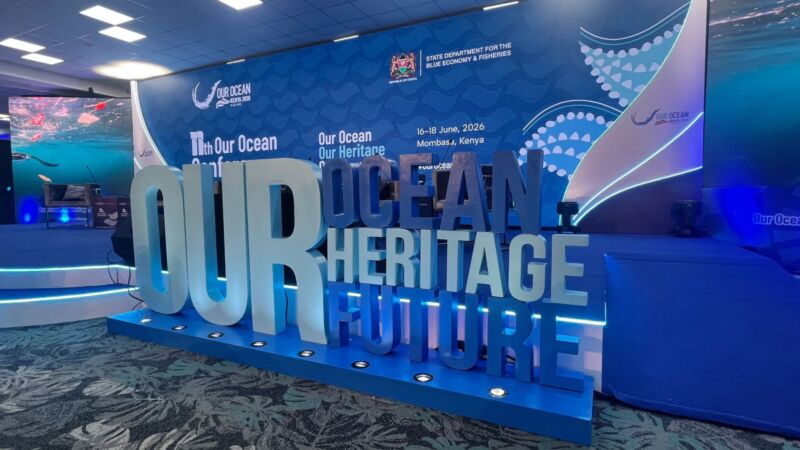
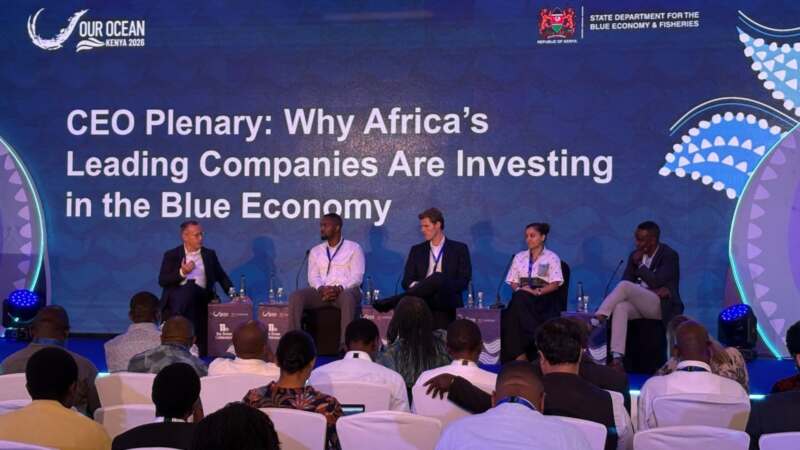
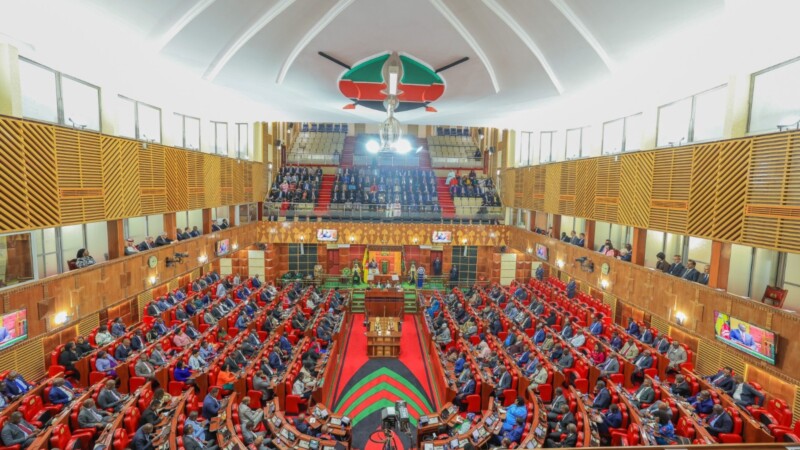
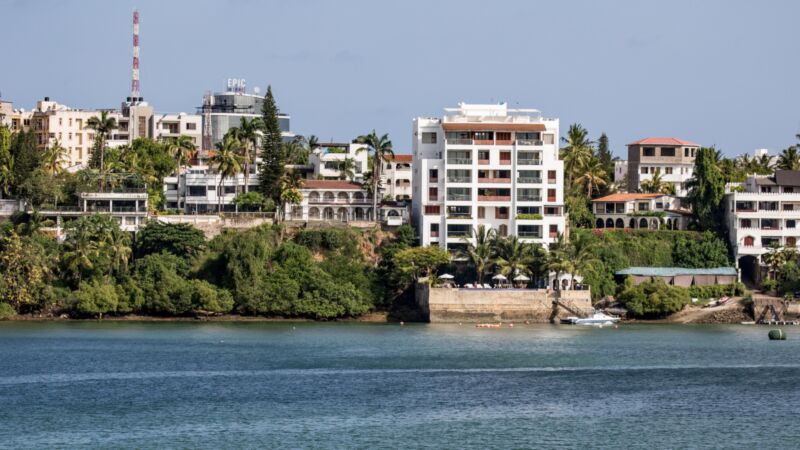
When the tents came down in Mombasa after the 11th Our Ocean Conference, Kenya left the table with something significant.
Not just the prestige of having hosted the first Our Ocean Conference on African soil. Not just the applause for a well-run event. But a public record — 47 specific commitments made in Kenya's name, across every action area the conference covers, with dollar figures attached, timelines stated and the eyes of 104 countries and organisations watching.
$1.05 billion in domestic commitments. Climate resilience. Marine pollution. Protected areas. Maritime security. Blue economy development. Sustainable fisheries.
It is the most comprehensive package of ocean-related commitments Kenya has ever made in a single forum.
It is also, now, a public accountability document.
And the most useful thing Blue Radio can do with it is not celebrate the numbers — it is ask what delivery actually requires.
What Kenya Committed To
The breadth of Kenya's commitments at OOC11 is genuinely impressive and worth stating clearly before anything else.
On climate and ocean resilience Kenya committed $150 million to promote ocean-climate research and establish the Kenya Ocean-Climate Research Centre by 2027. Another $150 million to strengthen the National Framework for Climate Services through the Kenya Meteorological Department. $100 million to build climate resilience for vulnerable coastal communities through nature-based shoreline protection and mangrove ecosystem management. $50 million for marine early warning systems. Twenty new ocean-climate monitoring buoys and tide gauges by 2028.
On marine pollution Kenya committed $15 million to establish five coastal circular economy hubs. $7 million to upgrade port infrastructure in Mombasa and Lamu for ship waste tracking. $5 million for a national marine debris monitoring system across ten coastal stations. $1.5 million toward a circular economy strategy targeting a 30% reduction in plastic leakage into the Indian Ocean.
On marine protected areas Kenya committed to legally designating the Msambweni-Vanga Seascape as a Ramsar Site by 2027. Finalising the joint framework with Tanzania for the Kwale-Tanga Transboundary Marine Conservation Area. Recognising 15 co-management areas as Other Effective Area-Based Conservation Measures by 2030 and conserving at least 30% of Kenya's marine and coastal waters.
On maritime security Kenya committed to developing a National Maritime Security Strategy aligned with the Djibouti Code of Conduct. Establishing a National Maritime Information Sharing Centre. Continuing leadership of the Djibouti Code of Conduct Working Group 3 on Cooperation and Coordination of Operations at sea.
On sustainable blue economy Kenya committed $250 million to mobilise blended climate finance for blue carbon. $10 million to scale seaweed farming from 300 to 8,600 acres. $8.5 million for five fish landing sites. $7.3 million for a processing plant at Shela beach. A national Marine Spatial Plan. Implementation of the National Blue Economy Strategy targeting $2.7 billion in aquatic resource revenue by 2030.
On sustainable fisheries Kenya committed $200 million for electronic monitoring of industrial vessels and AIS tracking for small-scale boats. $27 million for KMFRI stock assessments. $10.8 million for a National Marine Hatchery at Shimoni. $10.1 million for fisheries policy and management plans. $3 million for co-management areas. $2 million for IUU fishing capacity building.
That is 47 commitments. Across six action areas. In Kenya's name. On the public record.
Why Commitments Need More Than Ambition
The Our Ocean Conference has generated more than 2,900 commitments valued at over $169 billion since 2014.
The World Resources Institute, which serves as the OOC Secretariat, conducts regular implementation progress assessments. What those assessments have consistently shown — across all participating nations, not just Kenya — is that the gap between commitment and delivery is wide, persistent and rarely spoken about loudly enough in the same rooms where the commitments are made.
This is not a Kenya-specific problem. It is a structural feature of high-level international climate and ocean forums where the political incentive to commit is high and the accountability infrastructure for delivery is still maturing.
But Kenya is not just any participating nation this time. Kenya was the host. Kenya set the tone. Kenya used the platform to announce the largest domestic ocean commitment package in the country's history.
That creates a different kind of obligation — not just to the international community watching, but to the coastal communities in Msambweni, Shimoni, Lamu and Kilifi whose lives the commitments are ultimately about.
The Implementation Questions Worth Asking
None of what follows is a criticism of the intent behind Kenya's commitments. The intent is the right one. The questions are about what intent requires to become reality.
On the $450 million in climate commitments:
The Kenya Ocean-Climate Research Centre committed for establishment by 2027 is a significant institutional investment. Does the land, the governance structure and the procurement process exist to make a 2027 delivery realistic? Research centres of this nature typically require three to five years of foundational work before they are operational. Starting the clock now is the right move. The question is whether the institutional machinery behind the commitment matches the timeline attached to it.
The 20 ocean-climate monitoring buoys and tide gauges committed by 2028 are critical infrastructure for the marine early warning systems that coastal communities depend on. Kenya's existing buoy network has historically suffered from maintenance gaps — operational buoys going dark because replacement parts or technical capacity were not available. The commitment to install 20 new ones is meaningful only if it is accompanied by a funded maintenance and operational protocol that prevents the same attrition.
On the $28.5 million in pollution commitments:
The five coastal circular economy hubs are exactly the kind of community-facing infrastructure that the plastic pollution crisis on Kenya's coast requires. The question is where. Mombasa, Kilifi, Lamu, Kwale and Malindi would be the logical locations. Community ownership structures, waste collection systems and market linkages for recovered materials all need to be designed before the hubs can function. The $15 million committed is a realistic budget for physical infrastructure. It may not be sufficient for the operational ecosystem that makes the infrastructure useful.
The digital ship waste tracking system committed for Mombasa and Lamu ports by 2030 is a genuine governance innovation. Port waste reception has been a compliance gap in East African shipping for years. Making it digital and trackable changes the enforcement dynamic. The Kenya Ports Authority has the institutional capacity to deliver this if the funding flows consistently.
On marine protected areas:
The Msambweni-Vanga Ramsar designation by 2027 requires completing ecological assessments, community consultations and the formal nomination dossier within eighteen months. Community consultation in coastal Kenya — done properly, with genuine participation rather than nominal sign-off — takes time. Eighteen months is achievable but not comfortable. The quality of the consultation process will determine whether the designation has community legitimacy or just legal status.
The 30% marine and coastal waters protection target by 2030 is Kenya's contribution to the global 30x30 commitment. Currently Kenya's marine protected area coverage falls significantly short of that target. The 15 co-management areas being formalised as OECMs are part of the pathway. Whether they are sufficient depends on their size, location and the effectiveness of their management — none of which is determined by the designation alone.
On maritime security:
The National Maritime Security Strategy and the National Maritime Information Sharing Centre are institutional commitments that align Kenya with international frameworks it has been moving toward for several years. Kenya's continued leadership of the Djibouti Code of Conduct Working Group 3 is an existing operational commitment being reaffirmed rather than a new one. The implementation pathway here is the clearest of any commitment category — the institutions exist, the frameworks exist and the relationships exist. Delivery depends on sustained funding and political continuity.
On blue economy and fisheries:
The $200 million electronic monitoring commitment is the single largest fisheries investment Kenya has ever announced. It is also the one that requires the most careful implementation thinking. Electronic monitoring systems generate data. Data requires analysts. Analysts require training. Violations detected by monitoring require enforcement action. Enforcement action requires prosecutors and courts familiar with maritime law.
The monitoring investment without the surrounding institutional infrastructure produces data that sits in a system without changing behaviour on the water. Kenya needs to be building the entire chain simultaneously — not just the hardware.
The seaweed farming scale-up from 300 to 8,600 acres is the commitment with the most direct livelihood implications for coastal communities. It also has the most complex implementation requirements — suitable coastal sites, seed stock supply chains, processing capacity, quality standards and market linkages all need to exist before the acreage expansion creates income rather than just activity. The $10 million committed needs to be structured as a value chain investment, not just an acreage target.
The five fish landing sites and the Shela processing plant are the investments coastal fishing communities will feel most directly. They are also the most straightforward to deliver — they are physical infrastructure with clear procurement pathways. The question is whether the tendering process is open, the construction quality is managed and the facilities are designed with the actual working conditions of small-scale fishers in mind rather than against a generic infrastructure template.
What Accountability Actually Looks Like
The OOC Commitments Platform maintained by the World Resources Institute is the mechanism through which implementation progress is tracked. Every commitment made at OOC11 is publicly logged. Progress updates are expected. The accountability infrastructure exists at the international level.
What Kenya needs is the domestic equivalent.
A parliamentary mechanism — or at minimum a civil society monitoring framework — that tracks these 47 commitments against their stated timelines and reports publicly on progress. Not as an adversarial exercise but as a governance tool that helps the implementing ministries and agencies stay on course and flag implementation challenges before they become missed deadlines.
Blue Radio's role in that accountability ecosystem is not to be a watchdog in the adversarial sense. It is to be the platform that keeps these commitments visible to the coastal communities they are meant to serve — translating the technical language of international ocean governance into the practical question that matters to a fisher in Kwale or a mangrove conservationist in Lamu.
Did the landing site get built? Is the monitoring buoy working? Have the co-management areas been formalised? Is the seaweed farmer earning more?
Those are the questions that turn a commitment document into a lived reality.
OOC11 gave Kenya a remarkable platform. The commitments made here are the right ones. The ambition is genuine and the scale is appropriate to the challenge.
What comes next — the procurement processes, the community consultations, the institutional capacity building, the budget allocations in the next financial year — is where Kenya's ocean legacy will actually be written.