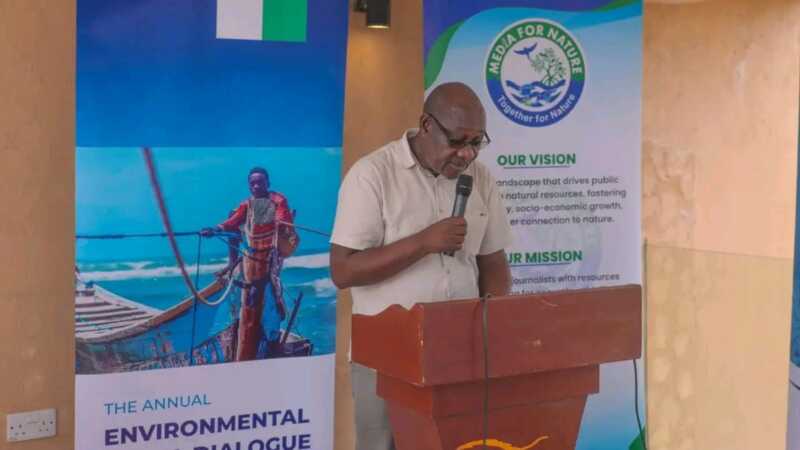
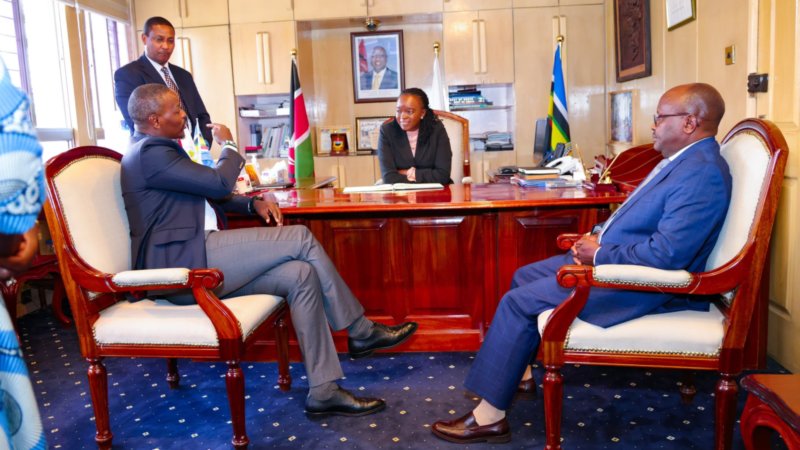
Media for Nature, in collaboration with Blue Radio, officially launched the Second Edition of the Environmental Media Dialogue at Vipingo Ridge on 13th March 2026.
In his opening remarks, the C.E.O of Media for Nature, Mazera Ndurya, said the organization continues to promote environmental discussions within communities following the success of the first Media dialogue held in 2025.
The inaugural Media Dialogue brought together journalists and scientists and discussed responsible environmental reporting.
Out of the dialogue, Tuna Fisheries Alliance of Kenya (TuFAK) organized a similar discussion involving journalists and people in the fisheries sector and value addition stakeholders to escalate the discussion further on how journalists can report responsibly.
This year, Mazera said Media for Nature has adopted a new approach by engaging both communities and journalists to discuss ocean-related issues ahead of the Our Ocean Conference, which will take place in Mombasa County in June 2026. He noted that this initiative aims to ensure that the voices of coastal communities who live near and depend on the ocean are heard.
At the same time, he emphasized the importance of collaboration among media houses to move such discussions forward and give citizens an opportunity to share their views. He also highlighted the need to document indigenous knowledge from local communities on environmental conservation.
“Our partnership between Media for Nature and Blue Radio is what gave rise to this media dialogue. We started last year, and this year we will have it at the Kuruwitu conservancy. We believe that when media organizations come together and amplify community voices, those voices are heard. The community will also share indigenous knowledge about the ocean which can then be preserved and passed on to the future generations,” he said.
The remarks were supported by the CECM for Kilifi County’s Department of Agriculture, Livestock and Blue Economy, Dr. Patterson Chula. He said that communities carry out many positive activities in the ocean, but these efforts are rarely highlighted by local journalists. Instead, such stories are often covered by foreign reporters.
For example, he mentioned stories of women who dive in the ocean to restore coral reefs without using oxygen tanks, and they have been doing this work for a long time. However, their efforts rarely receive media attention.
He encouraged journalists to visit Kuruwitu and Kilifi in general to witness and report on the important work the women are doing.
Dr. Chula also urged journalists to learn basic diving skills so they can gather information directly from underwater instead of relying only on stakeholders for reports.
“It is encouraging to see Media for Nature and Blue Radio working together to highlight stories about the blue economy. This is a good step because I have rarely seen media houses give much attention to this sector. I also encourage journalists to learn how to dive so they can capture images and videos from the ocean themselves and see how communities are doing great work in conserving the marine environment,” he said.
Maureen Mudi, the Coast Region Coordinator for the Media Council of Kenya, said in her speech that as a regulatory body, they support initiatives where media organizations and journalists work together to drive meaningful conversations within communities.
She also supported the idea of journalists learning diving skills so they document stories directly from the ocean instead of relying only on second-hand information.
She called on stakeholders to support this idea by helping provide journalists with basic diving training so they can better report on marine and environmental issues.
Kuso Abdulla, the Wildlife Project Manager at Vipingo Ridge, said Vipingo Ridge is founded on the promise to enrich the lives of local communities and leads the industry in both social and environmental responsibility. He said they have done conservation efforts at the place for the past 20 years.
He added that the organization has also been supporting community initiatives aimed at conserving the ocean. Hence the reason they agreed to partner with the media in advancing the conservation narratives.
“As an organization, we have been involved in conservation efforts on land as well as in the ocean. We want people from other areas to visit this place and benchmark our efforts so that they can also implement similar initiatives in their own communities,” he said.
Daniel Mwangunya, the Manager of Kuruwitu Marine Conservancy said it is encouraging to see journalists coming into the community to organize such dialogues.
He noted that communities carry out many activities aimed at conserving the marine environment, but these efforts are often not highlighted.
“We are happy that this Media dialogue will be held here in our area because it will give the community an opportunity to interact with journalists and share the work they are doing to protect the ocean and the environment,” he said.
The C.E.O of Blue Radio, Gilbert Were, said the dialogue brings together journalists, community, conservation organizations, and blue economy stakeholders to strengthen environmental storytelling and promote sustainable action for the ocean.
He announced that the main dialogue event will take place on 7th May 2026 at Kuruwitu Conservancy in Kilifi County.
In his closing remarks, he invited different partners and members of the public to take part in the event.
“We invite partners, sponsors, media, and the wider community to join us as we continue advancing conversations on marine conservation, sustainable livelihoods, and community-led ocean protection,” he concluded.
Other partners who attended the Media launch are Sote Hub, Ocean Alive, Kilifi County Investment and Development Corporation, Kenya Fisheries Service, Kilifi County BMU Network.