President William Ruto has announced that the first 100,000 electric vehicles imported into Kenya will be exempt from duty as part of efforts to accelerate the country’s transition to clean energy and reduce dependence on fossil fuels.
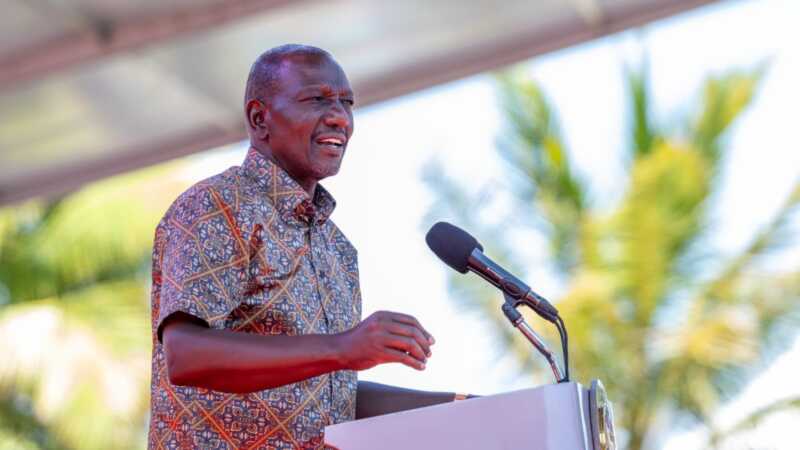
Speaking after a consultative meeting with transport sector stakeholders in Mombasa, President Ruto said the move is aimed at encouraging both public and private adoption of electric mobility amid rising global fuel prices.
“I’m making a declaration that the first 100,000 electric vehicles to be imported into Kenya whether for public service or private use will be duty free,” the President announced.
The Head of State said Kenya must embrace electric mobility as part of long-term measures to shield future generations from global fuel instability and oil supply disruptions.
The announcement comes at a time when Kenya is facing the effects of a global fuel crisis triggered by conflict in the Middle East, which has disrupted oil supply routes and pushed fuel prices upward worldwide.
President Ruto revealed that the government has already ordered 3,000 electric vehicles through the Ministry of Interior for use by security and administration officials.
He added that the government is also engaging private investors to establish electric vehicle manufacturing plants in Kenya, positioning the country as a regional hub for green mobility.
Kenya has in recent years intensified investment in renewable energy, with geothermal, wind and solar power forming a significant share of the country’s electricity mix.
The government has also been pushing for adoption of electric buses, motorcycles and private vehicles as part of its climate action agenda and plans to reduce carbon emissions.
Industry players have previously cited high import taxes and infrastructure challenges as key barriers to widespread electric vehicle adoption in Kenya.
The new duty-free incentive is expected to lower acquisition costs and boost uptake.
President Ruto said the move is not only about addressing the current fuel crisis but also about building “a more self-reliant, resilient and economically secure Kenya for generations ahead.”