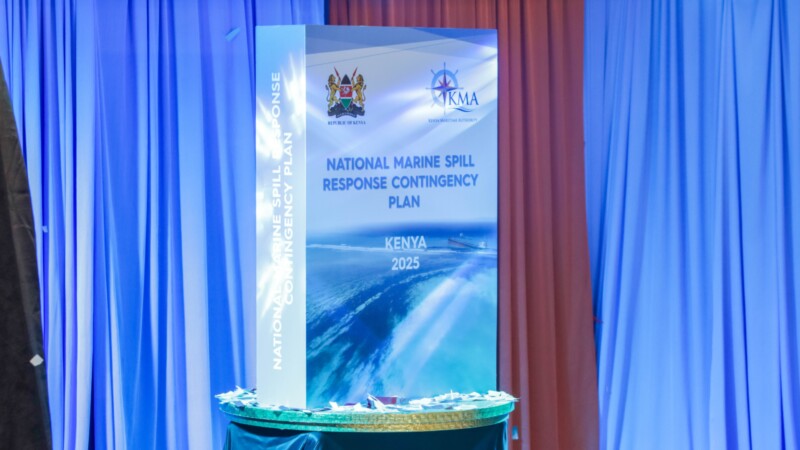
Kenya has launched the National Marine Oil Spill Response Contingency Plan, a move aimed at strengthening the country’s ability to prevent and respond to oil spills as maritime traffic and port activity continue to expand along the Coast.
The plan was launched on Thursday (11th December), in Mombasa by Aden Millah, Principal Secretary in the State Department for Shipping and Maritime Affairs, during a ceremony organised by the Kenya Maritime Authority (KMA) in partnership with the Norwegian Coastal Administration.
The launch was accompanied by a coldwash of MASEPOLREX25, a major regional oil spill response exercise conducted in July that tested Kenya’s preparedness to handle a large-scale marine pollution incident.
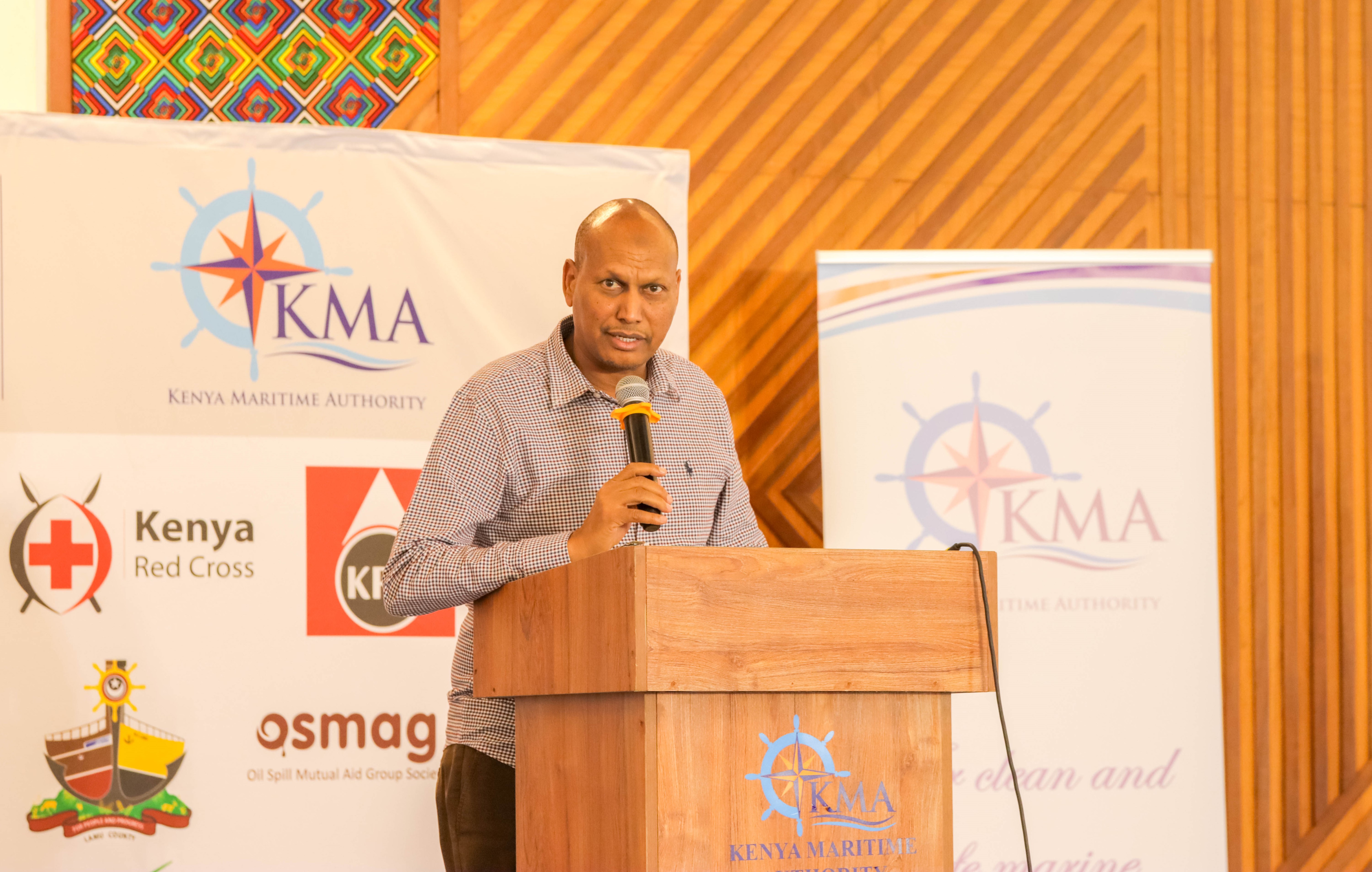
Shipping & Maritime Affairs PS, Aden Millah speaks during the launch of the National Marine Oil Spill Response Contingency Plan in Mombasa (Photo: Patrick Chiriba)
“Kenya’s maritime sector continues to grow, with increased vessel traffic and expanded port operations which heighten the risk of marine pollution, particularly oil spills,” PS Millah said.
He added: “A robust contingency plan is therefore essential to protect our precious marine ecosystems, coastal livelihoods, and the national blue economy.”
What MASEPOLREX25 tested
The MASEPOLREX25 Regional Field Training Exercise, held in Mombasa in July, brought together national agencies, emergency responders and international partners under the Indian Ocean Commission framework.

Delegates listen in during the launch of the National Marine Oil Spill Response Contingency Plan and the MASEPOLREX25 coldwash session (Photo: Patrick Chiriba)
The exercise simulated a worst-case oil spill scenario off the Kenyan coast, testing inter-agency coordination, command structures and operational readiness under a Tier III oil spill response - the highest level of emergency.
According to KMA, lessons from the exercise directly informed the updated national contingency plan launched this week.
Clear roles and coordination
KMA Director General CPA Omae Nyarandi, whose remarks were delivered by Corporation Secretary Jessica Mbai, said the plan fulfils Kenya’s obligations under the International Convention on Oil Pollution Preparedness, Response and Cooperation (OPRC).
The plan outlines responsibilities for government agencies, county authorities, private sector operators and security agencies, and introduces a unified multi-agency command system for oil spill response.
Julius Koech, Director of Maritime Safety at KMA, said the plan is supported by three technical manuals covering wildlife response, shoreline clean-up techniques and oil waste management.

KMA's Julius Koech presents an overview of the Contingency Plan during the launch in Mombasa. (Photo: Patrick Chiriba)
Security, ports and partnerships
Kenya Navy Fleet Deputy Commander Colonel Robert Birech said environmental protection is now a key element of national security, particularly in the Western Indian Ocean shipping corridor.
“Preparedness is not a one-off activity; it is a continuous process,” Birech said, reaffirming the navy’s commitment to coordinated maritime response efforts.
Representing the Kenya Ports Authority, Captain Patrick Onyango, the Harbour Master and General Manager for Marine Operations, said KPA would support implementation of the plan, noting that port operations are central to oil spill prevention and response.
Building national capacity
KMA Board Chair Ahmed Kolosh said the authority has trained about 1,000 oil spill responders over the years, working with partners such as KPA, Kenya Pipeline Company, the Oil Spill Mutual Aid Group and international agencies.

Ahmed Kolosh, KMA Board Chair addresses participants during the launch of the National Marine Oil Spill Response Contingency Plan (Photo: Patrick Chiriba)
The Norwegian Embassy’s Deputy Head of Mission Geir Arne Schei was among international partners present at the event, reflecting continued foreign technical support for Kenya’s marine environmental protection efforts.
PS Millah urged agencies and private sector players to take collective responsibility in implementing the plan, saying strong coordination would be critical to protecting Kenya’s coastline and coastal communities.